
goatai.io/steel
Steel Operations Intelligence
Steel is where the reasoning engine is deepest — three decades of plant automation behind it. From the furnace mouth to the dispatch yard, the plant is one irreversible route: melt, lift, cast, roll, store. We build physics-grounded AI along that route — grounded in the physics of each stage. It answers when it knows, and it says so when it doesn’t. Every system here is scoped as a business case first — value created, loss avoided.
- HeatVue
- LVS
- HookVision
- YardVision
- DFMS
- Caster Reasoning
Plant-Automation Heritage
30+ yrs
Steel floor experience
Approach
Physics-first
Problem-up, not catalogue-down
Engagement
Co-creation
Inside the melt shop
Reasoning & Safety Systems
5
EAF · BOF · ladle · crane · yard
The Systems
Five systems, one engine
Steel is the concrete answer — the deepest roots, and the proof the architecture generalizes. Each system sits at an honest, distinct stage, described by the capability it delivers, not by install-specific numbers that vary plant to plant.
Physical state is the only memory that never leaves when the shift changes.
Every system runs the same reasoning cycle over steel-specific physics — monitoring, prediction, reasoning, decision. How the engine works →
Crane anti-collision
HookVision
The hook, its load, and the swing, watched continuously from the cabin — risk reasoned, not just distance measured; it warns in time to act and never owns the stop. A true retrofit that needs nothing from the crane.
- The hook, its load, swing, and foreign objects — watched continuously from the cabin
- Continuous coverage down the bay — no blind spot between near and far
- A protective envelope that grows with speed (braking) and swing (swept path)
- Advisory by design — it warns; the operator decides. It never owns the stop
Slab & coil yard intelligence
YardVision
Every crane and every load across the slab and coil yard, placed on a live map in real time — built to feed yard management and safe-zone enforcement.
- Fixed coverage of the whole yard — nothing that moves, sweeps, or drifts out of calibration
- Crane position tracked continuously across the yard
- Load identification — slab vs. coil, dimensions, stacking position
- Monitoring today — physical interlock is the path to remote yard operation
The operating wall — BOF & EAF
HeatVue
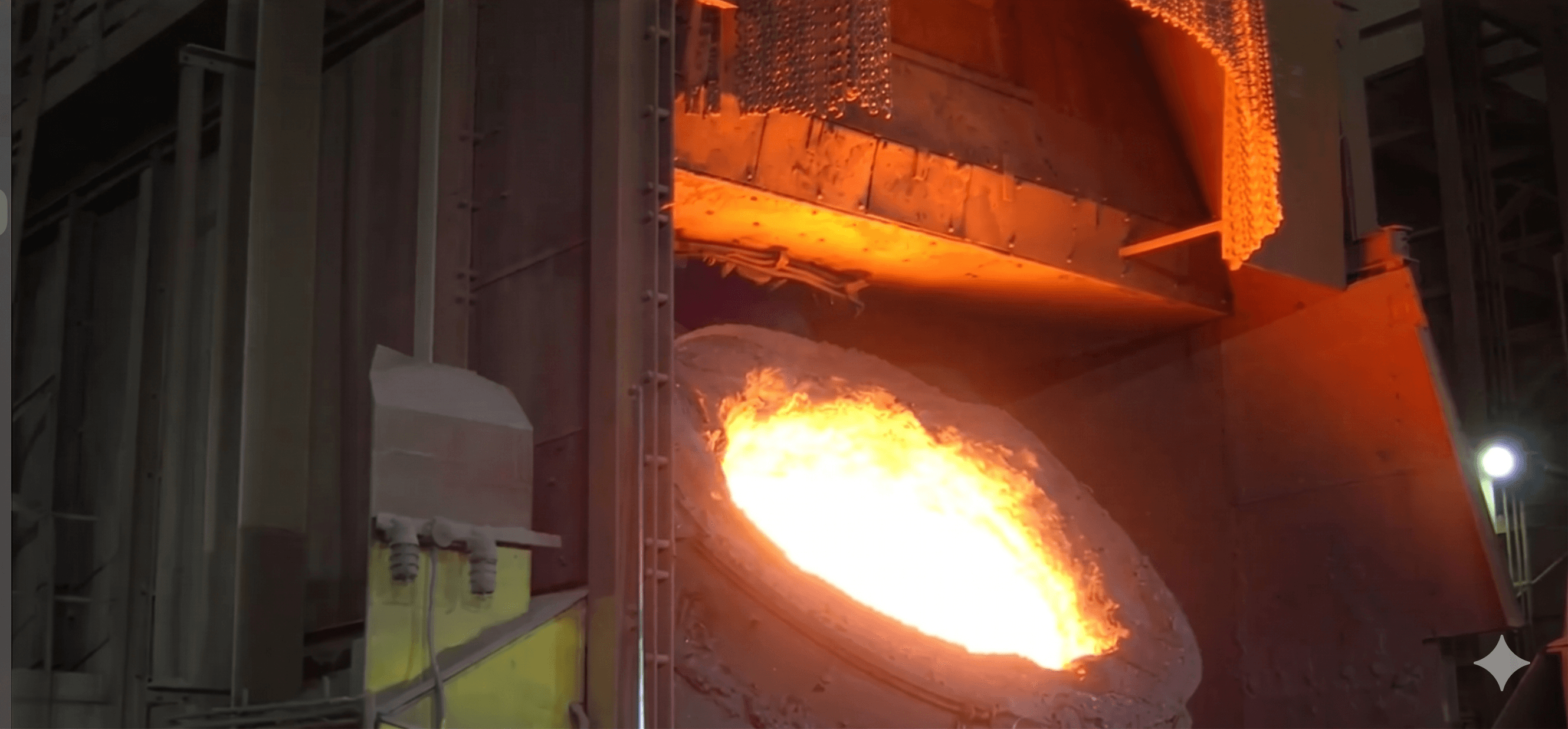
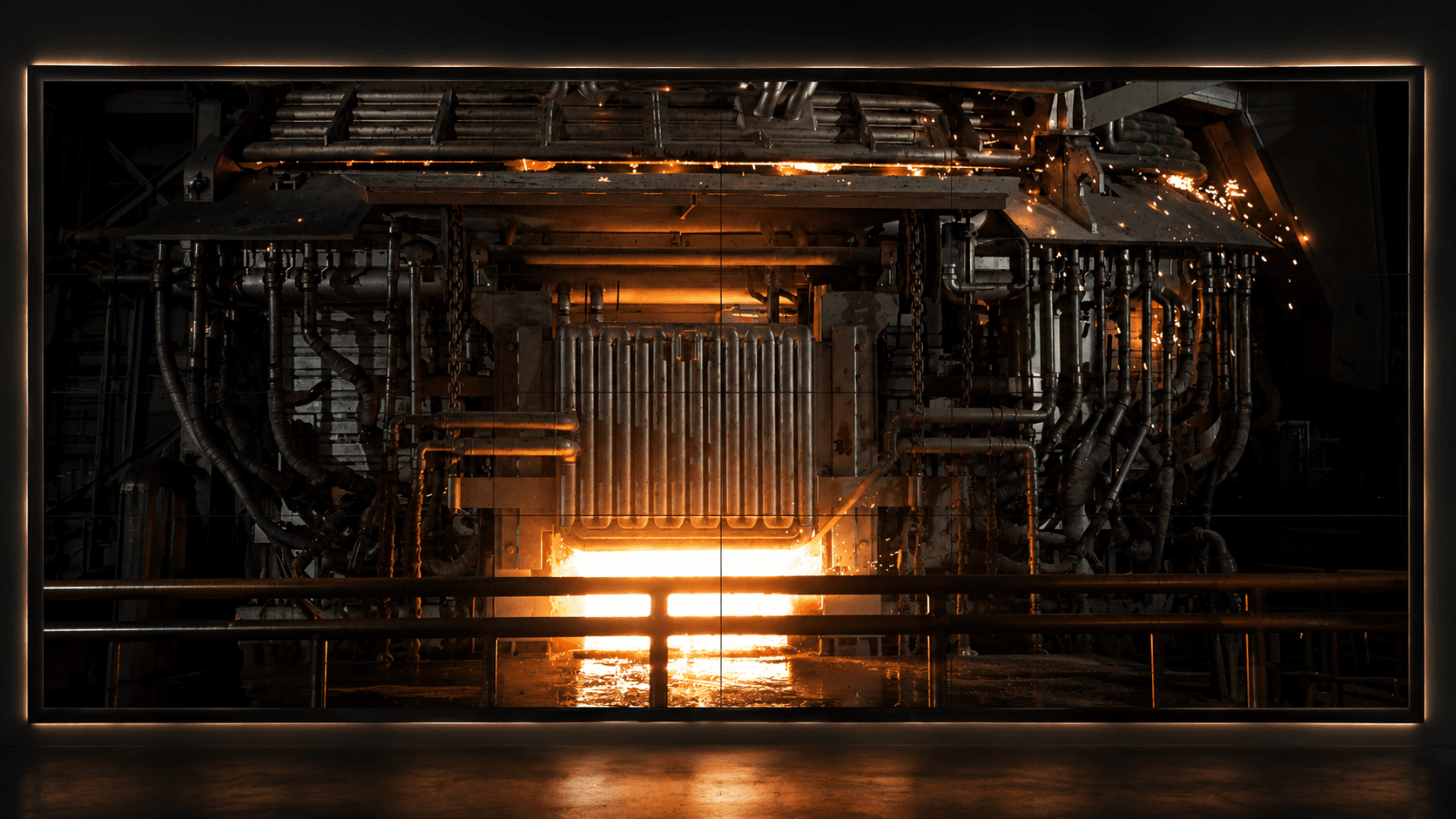
HeatVue is the operating wall for the furnace — BOF or EAF. The operator moves off the floor and sees more, not less — every read they make by eye, larger, sharper, and live. Those reads become his open set; over time, an expert operator's assistant for the furnace.
A furnace is run half-blind — on what one operator reads through scarred glass, and on nerve.
- The furnace on the wall — every zone, clean and real-time, off the floor
- The reads, surfaced — flame, foam, slag, lining, the operator's open set
- Live to the wall — act on it as if you were standing at the glass
- Over time, an expert operator's assistant — the call stays the operator's
Ladle Visualization System
LVS
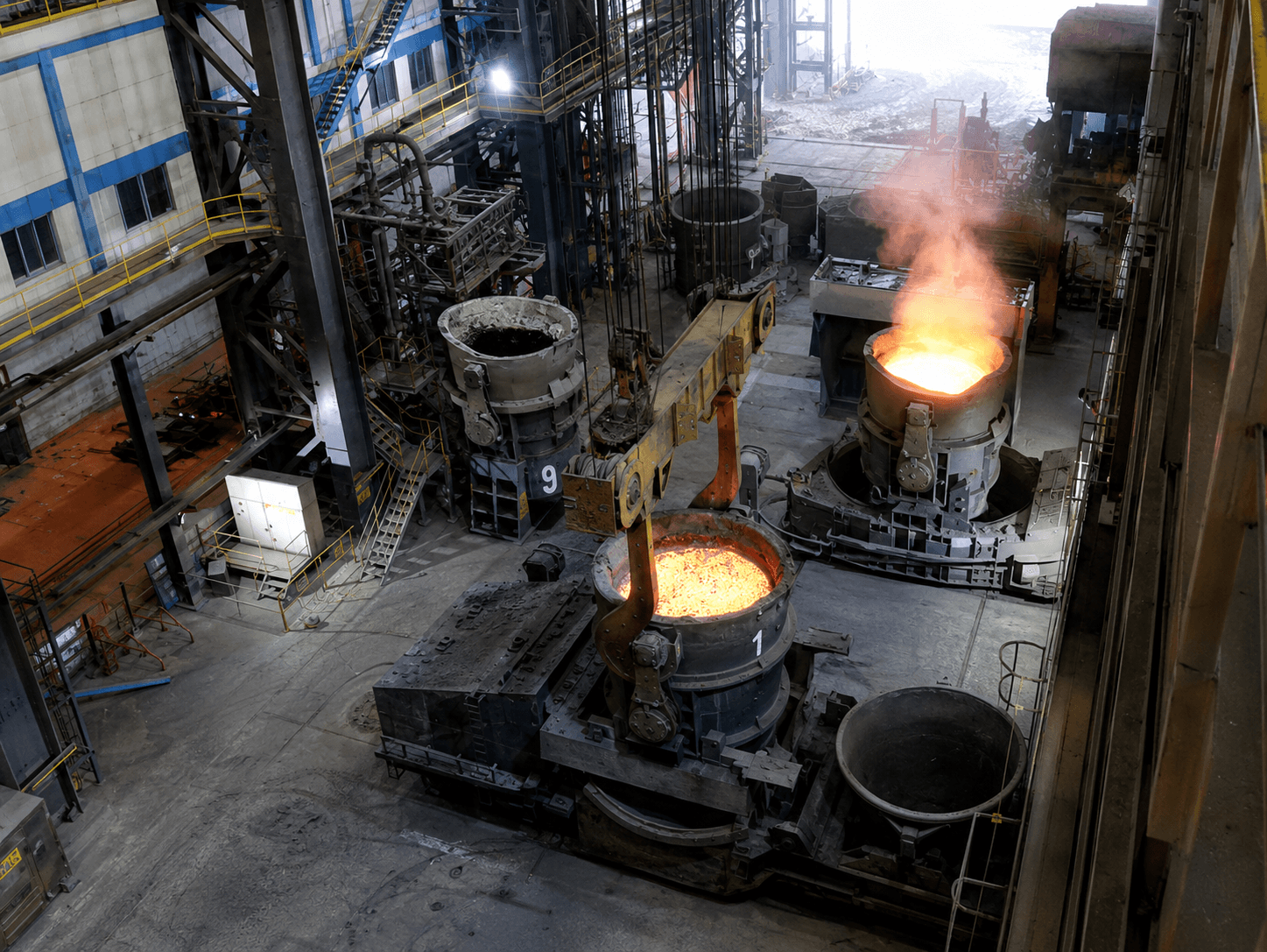
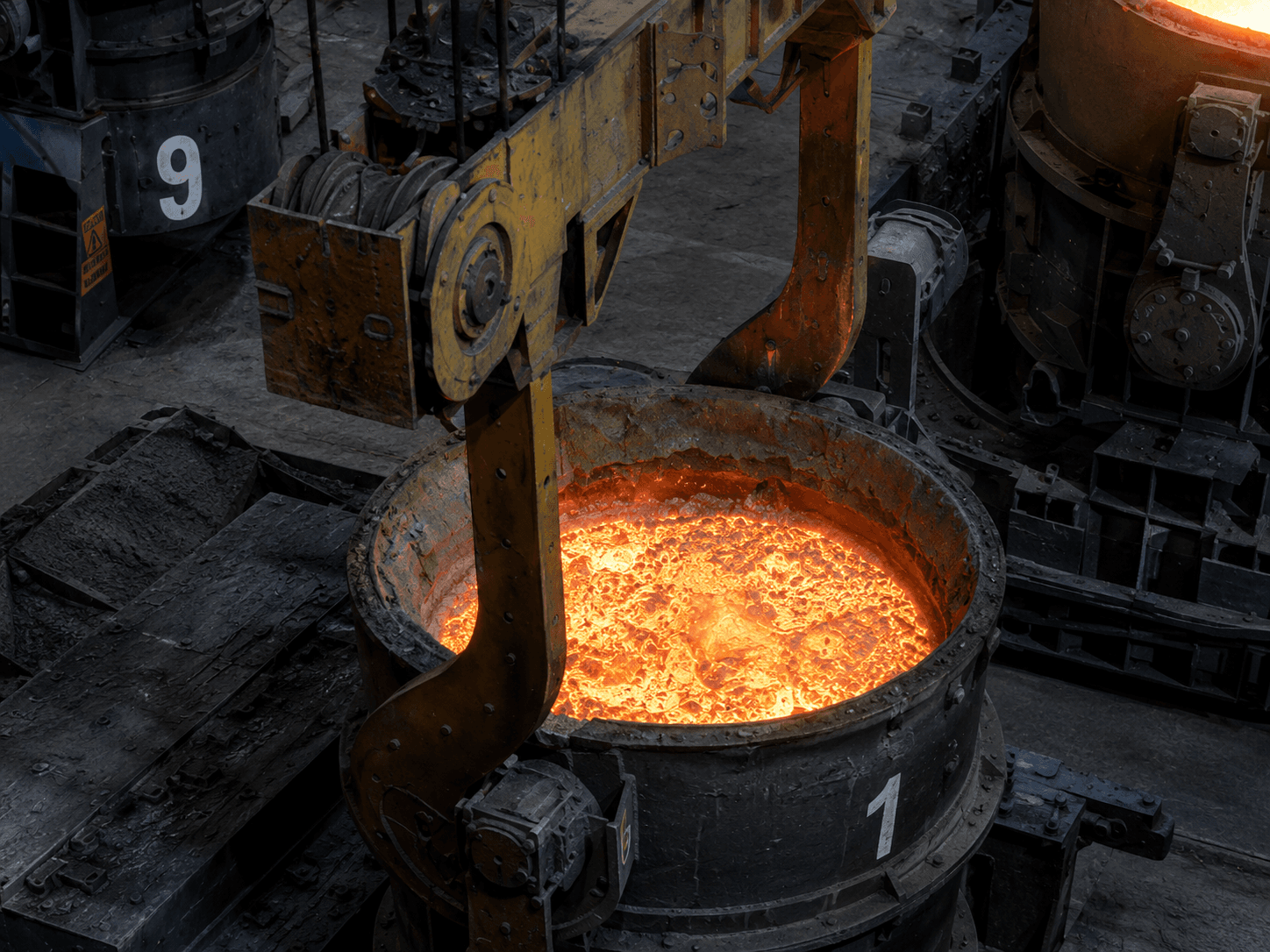
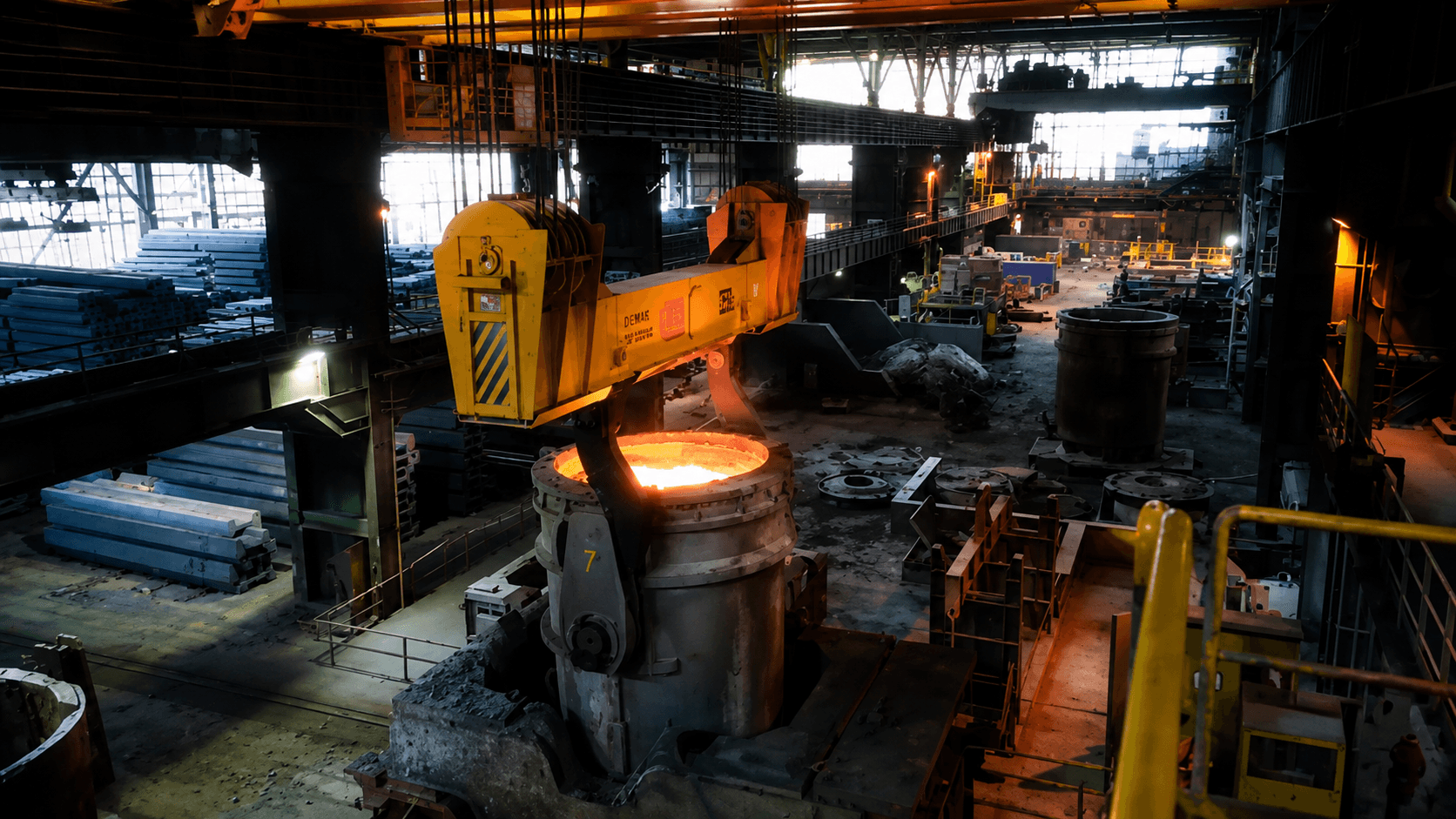
The most dangerous lift in the plant, made legible — the occluded trunnion engagement you can't see at pick-up, and the precision turret set-down no one watches perfectly every lift. For the manager, the bay's whole state; over time, an expert operator's assistant for the ladle crane.
- Pick-up: the occluded engagement face, shown low-latency, every lift
- Set-down: the precision turret watch, held continuously — the same attention engine as the bay
- The bay known — ladle tracking, life by heat count, superheat, turret state
- Runway-side + crane-cabin coverage; bay geometry scoped to the install
Process-physics reasoning
BOF & caster surrogates
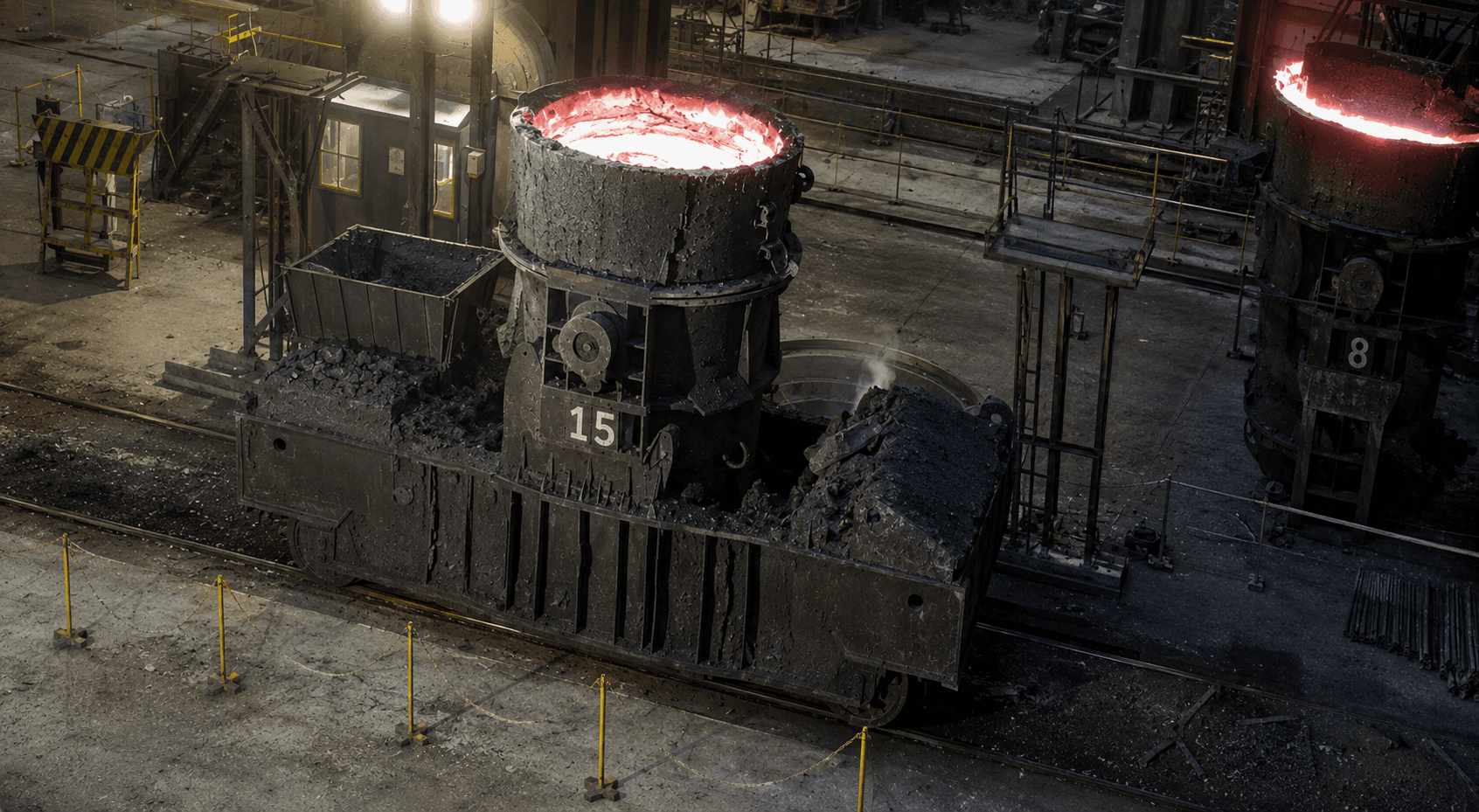
Physics reduced-order models coupled with ML surrogates for endpoint and quality reasoning over the BOF converter and continuous caster — the process-physics layer the systems above reason against.
- Physics ROMs + ML surrogates for the converter and caster
- Endpoint and quality reasoning
- Grounded in the plant's real converter-and-caster geometry
- The metallurgical and thermal physics layer of the engine
Crane-Safety Convergence
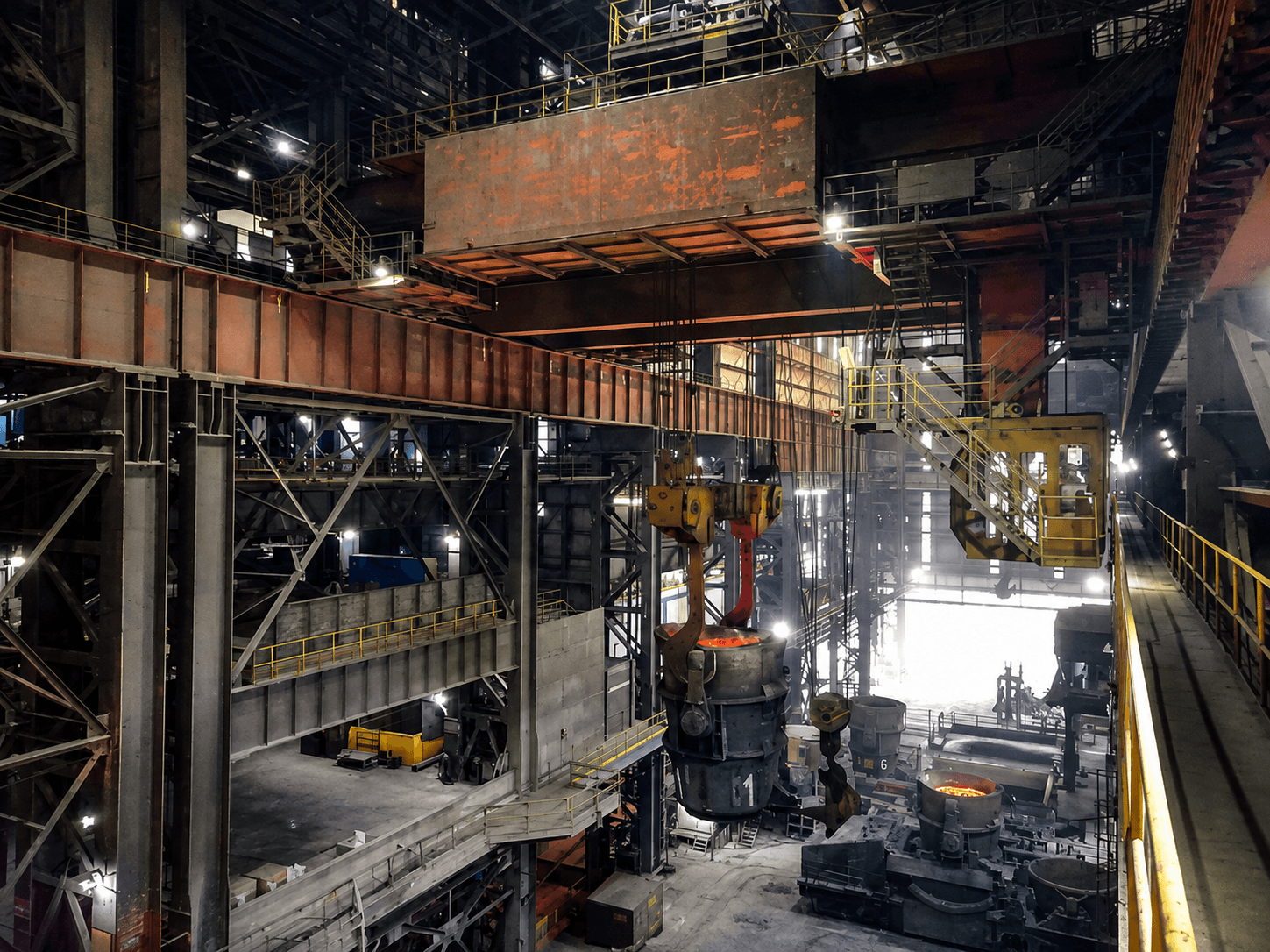
The ladle crane is the most dangerous operation in the plant. We instrument all of it.
A suspended ladle of molten steel leaves a sub-two-second reaction window. The risk is not in one component — it is in the machine, the operator, and the load at once. GOATAI instruments all three surfaces of that single lift with one reasoning architecture.
The machine
In developmentHookVision
The hook, its load, and the clearances around them, watched continuously — any deviation from normal surfaced to the operator in time to act, not a catalogue of collision cases. A true retrofit that needs nothing from the crane; the deterministic barrier always owns the stop.
The operator
Operator cognitive-riskDFMS — crane mode
Operator cognitive-risk monitoring built for the crane cabin — attention read against crane phase, through PPE, at the edge where connectivity dies.
The ladle
In designLVS
The load itself — the occluded trunnion engagement you can't see at pick-up, and the precision turret set-down no one watches perfectly every lift. The same attention engine, pointed at the ladle.
Machine geometry, operator cognition, and the ladle itself — three risk surfaces of one lift, one reasoning architecture.
How an engagement runs
Built with the plant, not sold to it
Three stages from first technical contact to a signed, business-cased proof-of-concept — between a founder with 30+ years on the steel floor and the plant's own operations and automation teams. These systems have no functional equivalent on the market; the engagement is structured as co-creation.
Technical deep-dive
Your team and ours, working the physics of your specific problem — before anything is scoped or installed.
Site assessment
The install scoped against your bay, your furnace, your yard. Instance grounding begins here — the engine is fitted to the plant, not the plant to the engine.
Staged joint proof-of-concept
Co-creation with your operations and automation teams; success criteria signed as a business case — value created, loss avoided.
We lift the floor, not replace the ceiling — the expert remains the outlier.
Explore a co-creation engagement
Technical deep-dive · Site assessment · Staged joint PoC
Knowledge
We explain the hard problems in the open.
The durable advantage is demonstrating the engineering, not asserting it. Our knowledge hub works through the physics and human factors behind these systems — the crane-cabin analysis is written from the melt shop.